Spread
Grader spreads the lift to the specified loose thickness.
Graders to spread and shape, rollers and compactors to compact: the pair that turns loose fill into a formation that passes testing. Deployed with operators from our fleet of 20+ graders and 30+ rollers, with soil / vibratory compactors as per requirement.
A motor grader uses a long adjustable blade to spread material evenly, cut and fill small differences in level, and shape crossfall and camber. A roller then compacts each layer to the density the specification asks for. On most earthwork, road and plot-development jobs they work as a pair, with a water tanker bringing the soil to the right moisture.
| Machine | Typical class | Used for |
|---|---|---|
| Motor grader | Standard road-construction graders | Spreading fill, fine grading, shaping subgrade and granular layers, cutting side drains |
| Vibratory soil compactor | Single-drum, commonly the 10–12 T class | Compacting earth fill, embankments and subgrade in layers |
| Other rollers | Tandem or static rollers, as per requirement and availability | Finishing granular layers and smaller areas |
Exact classes and models are confirmed in the quote from what our fleet has free at the time.
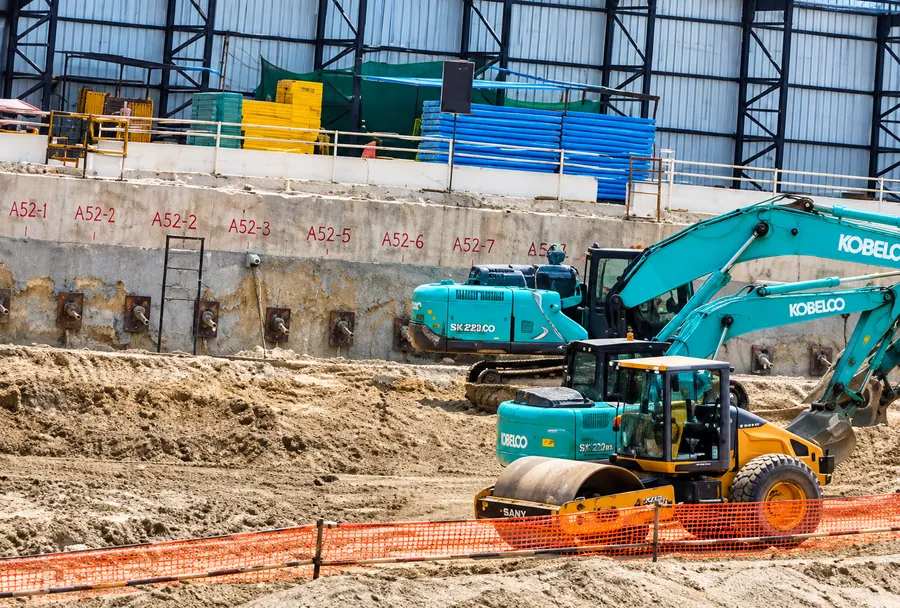
Most compaction failures come from three things: layers placed too thick, soil too dry or too wet, and passes counted instead of density measured. We work to the layer thickness, moisture and density your specification or consultant sets. The grader spreads each lift to thickness, the tanker brings it near the optimum moisture, and the roller compacts it before the next lift goes down.
Field density testing and acceptance are normally done by the client's QA team or a third-party lab. We plan the roller passes and the sequence so testing can keep pace with the work.
Grader spreads the lift to the specified loose thickness.
Water tanker sprays to bring the soil near optimum moisture.
Roller compacts in overlapping passes to the specified density.
QA checks density and levels, then the next lift goes down.
On large greenfield sites such as the Jewar Project (approx. 24 lakh m³ of excavation and earthwork), the speed of levelling and compaction decides how fast the whole site moves. That is why we keep graders and rollers in numbers, not one or two.
A grader is only as good as the levels it is cut to. Before spreading, we agree the reference levels and grid with your surveyor, and the operator works to pegs, string lines or the level marks your team sets. On roads and hardstands the crossfall and camber are checked as the layer is shaped, not after it is rolled, because correcting a compacted layer costs far more than shaping it right first time. At the end of each section a joint level check confirms the finished surface before the next layer or the next trade moves in. For measured filling packages, the same joint surveys before and after the work become the basis of measurement.
For most filling, levelling and road formation, yes. The grader spreads and shapes; the roller compacts. A small area can sometimes be spread by an excavator or backhoe, but a grader gives far better level control on large areas.
For earth fill and subgrade, a vibratory single-drum soil compactor is the usual choice. Granular and finishing layers may call for a different roller, as per your specification.
Field density tests and acceptance are usually done by the client's QA team or a third-party lab. We work to the layer thickness, moisture and density specified and keep pace with testing.
Yes. We run 15+ water tankers for compaction moisture and dust control, and can supply them with the grader and roller as a set.
Per shift or per month against hour-meter readings and signed log sheets, with operator. Diesel terms are confirmed in the quote. Measured filling packages can be quoted per cubic metre.
Yes. If you would rather hand over the result than manage machines, see our site levelling & filling service.
Tell us the site location, graders / rollers needed, area and layer spec, start window and whether you are a developer, EPC or main contractor. Attach drawings or BOQ if available. Our business team follows up on qualified enquiries first; for urgent live sites, call us directly.
Tell us the site location, scope (graders / rollers needed, area and layer spec), planned start and whether you are a developer, EPC or main contractor.
507, 5th Floor, Pegasus Tower, Block A-10, Sector 68, Noida, Uttar Pradesh – 201309